Black Irish explosive
The Running ManBlack Irish explosive is the Dynacore Hi-Impact plastic explosive that Ben Richards turns into both a weapon and a language of coercion. By announcing that he carries twelve pounds of it and that a General Atomics imploder ring is half-cocked inside the charge, Richards converts an unseen object into a public mechanism of control: the crowd flees, the police lose their human barricade, and the authorities must respond to the possibility that a concealed mass of explosive can destroy the jetport and its fuel storage tanks.
Identity and Claimed Capacity
Black Irish explosive is identified by Richards as a variety of Dynacore Hi-Impact plastic explosive. He presents the material as compact enough to conceal in a coat pocket but powerful enough to destroy everything and everyone within a third of a mile, with the further possibility of igniting the jetport fuel storage tanks. The threat is therefore not limited to the people immediately surrounding him; it extends outward through the airport acreage and turns the fuel infrastructure into a second possible source of catastrophe.
The explosive’s claimed force depends on more than the plastic charge itself. Richards says that a General Atomics imploder ring has been set into it and pulled out to half-cock, making the device appear unstable as well as destructive. His warning is built around the idea that a single jolt could trigger the charge. The object consequently functions in two ways at once: as an instrument of physical devastation and as a device whose supposed readiness makes every movement around Richards dangerous.
Use in the Airport Standoff
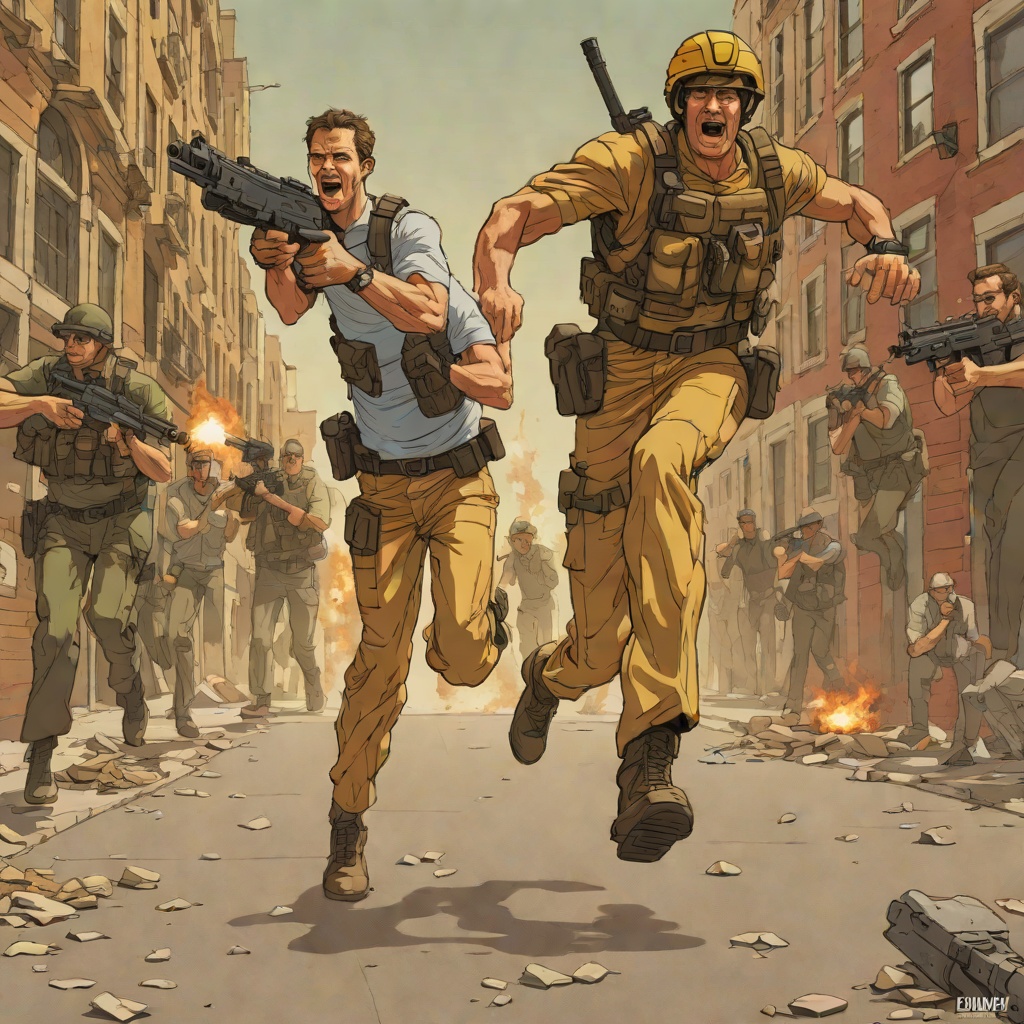
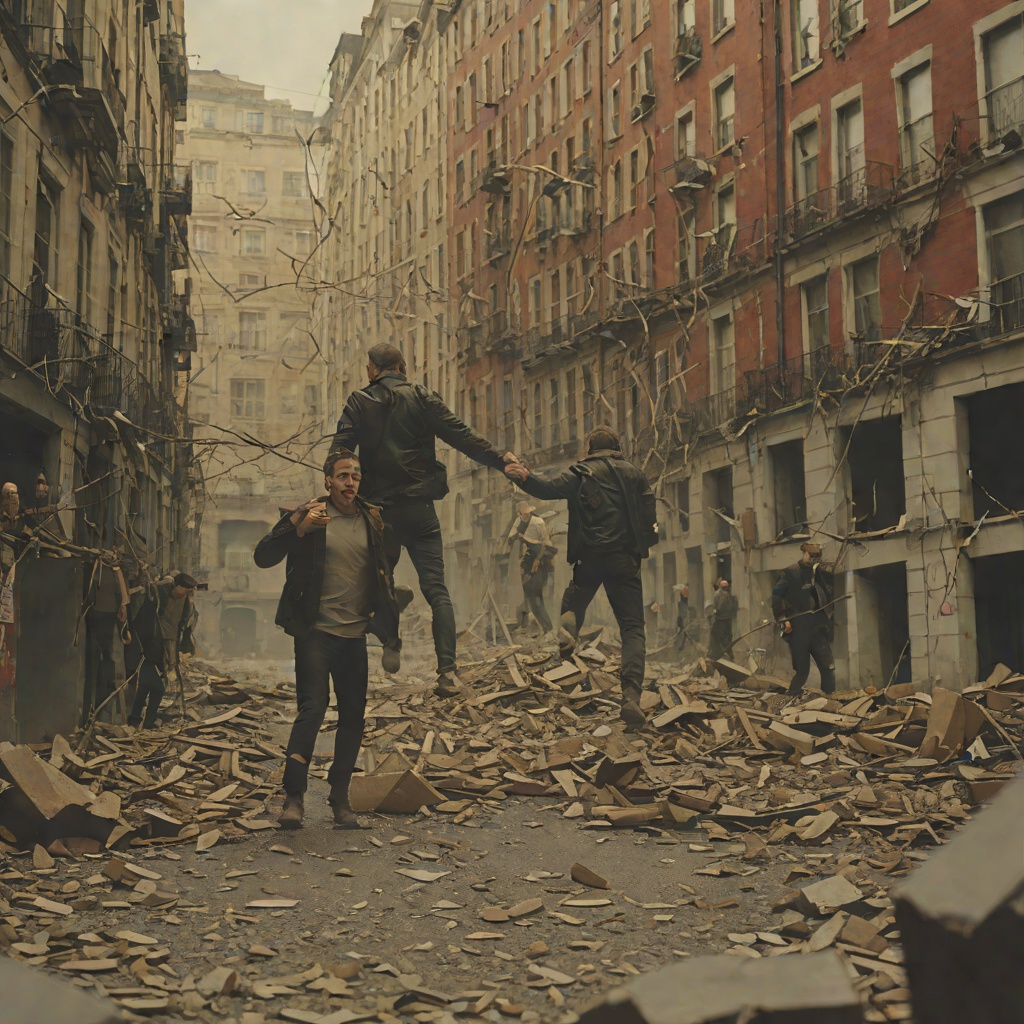
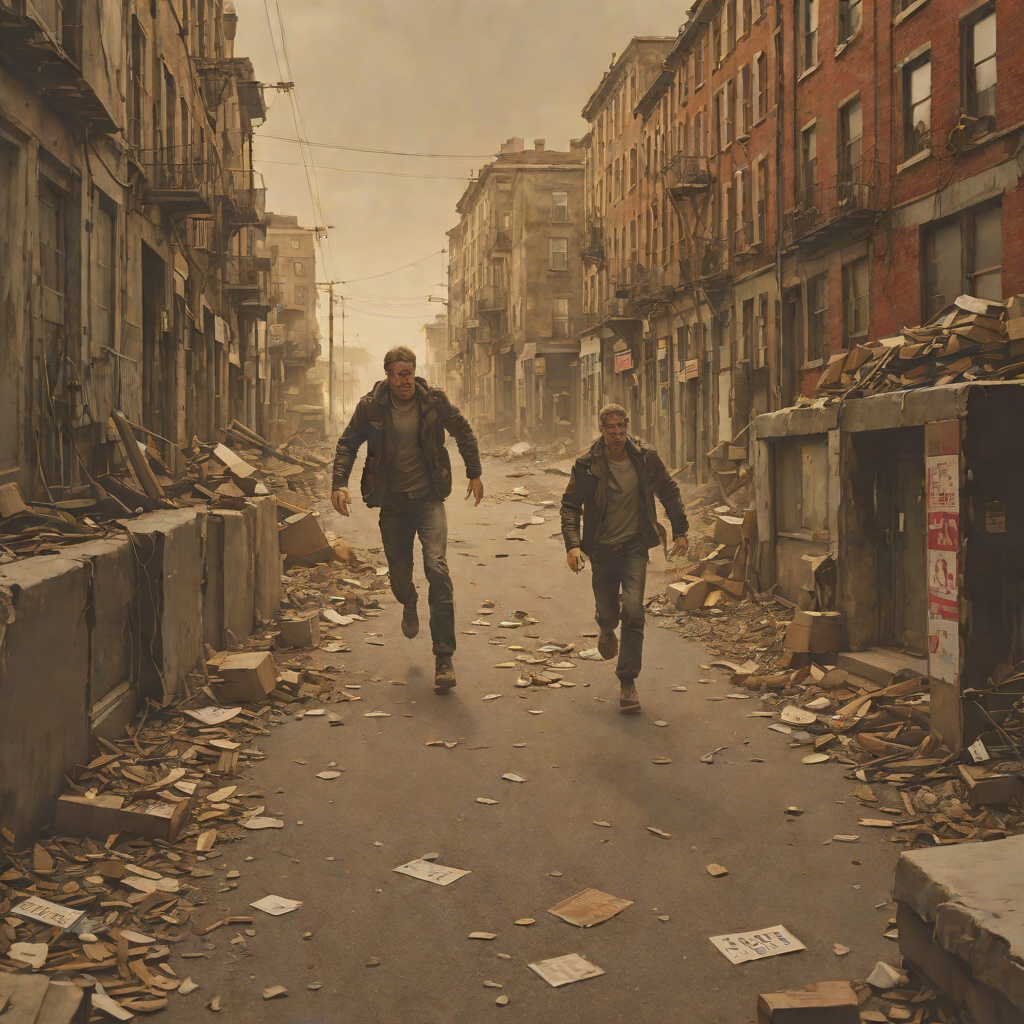
Richards places the threat before a large public audience rather than confining it to a private negotiation. Speaking through a bullhorn across the jetport, he gives the explosive a precise weight, a named variety, a specified trigger, and a radius of destruction. That accumulation of detail makes the threat harder to dismiss. The police wait tensely, the crowd shuffles, and then the announcement produces a sudden tide of panic. Men and women run across roads and fields, stream through the gates, and climb the cyclone fence, while the police discover that the crowd they had been holding back has become an escaping mass.
The object’s power in this scene is inseparable from uncertainty. Amelia Williams sees no disbelief on the police officers’ faces, and Richards’s threat is treated as credible enough to reorganize the airport. At the same time, the narration preserves the possibility that the explosive may be only a product of his criminal ingenuity, a frightening claim whose effectiveness depends on what nobody can see. Black Irish explosive therefore creates terror before it creates visible destruction: its unseen presence makes ordinary proximity, police procedure, and the airport itself feel unstable.
Richards uses the threat to impose an exact logistical demand. He orders that a fully fueled jet be prepared with a skeleton crew, specifies either a Lockheed/GA or a Delta supersonic, requires a range of at least two thousand miles, and gives the authorities ninety minutes. The explosive is thus not merely a threat of refusal or retaliation. It becomes the leverage by which Richards attempts to dictate the next stage of his escape, converting destructive potential into a timetable, a vehicle specification, and a route away from the airport.
Credibility, Detection, and Reversal
Evan McCone directly challenges the claim by arguing that a man without a G-A rating has no way of obtaining Dynacore. He demands that Richards release Amelia Williams and come out, presenting access to the material as evidence that the threat must be false. Richards counters that Dynacore can be bought in the streets for cash and says that the money came from the Games Federation. The confrontation consequently shifts from the explosive’s alleged physical capacity to the question of who has access to it and whether official credentials are necessary.
Dan Killian later makes the supposed device the center of a more decisive reversal. He tells Richards that the plastic-explosive performance is a bluff, while identifying a separate red button as the genuine threat: if pressed, it would cause the plane to be destroyed by surface-to-air Diamondback missiles carrying clean nuclear warheads. Killian’s distinction divides Richards’s weapon into appearance and reality. The Black Irish threat has already achieved practical effects, but Killian claims that the aircraft’s destruction is controlled elsewhere and by a far more powerful system.
Killian’s explanation also rests on the plane’s security architecture. He says that Richards could not board a Lockheed G-A plane with plastic explosive without triggering alarms because the aircraft contains four separate detectors designed to foil hijackers. A fifth detector was installed in the parachute Richards requested. The control tower watched the alarm lights with interest and trepidation when Richards boarded; the fact that none illuminated led observers to conclude that he probably did not possess the explosive. In this account, the material object is defeated not by being found, but by the absence of the expected signal.
Narrative Function and Significance
Black Irish explosive embodies the unstable boundary between an object and a claim about an object. Richards’s announcement gives it a weight, a brand, a trigger state, and a blast radius, but the authorities’ later account contests whether it could have accompanied him onto the aircraft at all. The narrative keeps the explosive materially dangerous while making its strategic importance depend on performance, surveillance, and competing systems of knowledge.
Its threat also exposes the asymmetry between Richards and the institutions pursuing him. Richards has only the alleged charge and the bullhorn, yet the announcement temporarily forces police, press, and crowd to behave as though the airport were already within the object’s destructive reach. Dan Killian, by contrast, reveals a state-backed apparatus involving aircraft detectors, control-tower observation, missiles, and nuclear warheads. The explosive’s apparent power is therefore real as a means of pressure but limited within a larger technological network that can monitor, outmatch, and redefine it.
The object’s most consequential effect is the fear it produces without a confirmed detonation. Black Irish explosive changes the scene by making the crowd run, compelling preparations for a long-range jet, and sharpening the negotiations over Amelia Williams and Richards’s surrender. Even when its authenticity is challenged, it remains narratively active: the bluff is said to be soured, but the danger has already altered the choices available to everyone present. It is the emblem of Richards’s desperate strategy—turning concealed material, technical language, and the possibility of mass death into a temporary form of freedom.